Thursday, March 08, 2012

Expreso de los Andes Expedition!

Hey Everyone!
Kev has been writing posts for the Vancouver Sun about our adventure....here is everything so far in one humongous blog entry!

Day 16: Highway to hell (Sunday - March 4th, 2012)
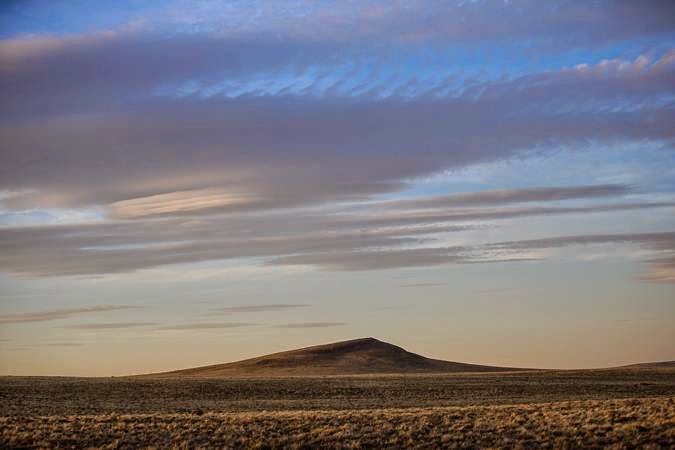
Today the dial on our oven that's Argentina was cranked to its max. By 8:30am we're sweltering, sweat pouring off us like we've been doused

with water, the humidity in the air as thick as mist. Bob joins us this morning as we make our way down our isolated dirt track, making us a

team of three.

It's difficult to articulate what heat like this does to a person but over the course of our morning we would stop every 5kms to rehydrate and

need 1.5 liters of Gatorade and water each just to stay on top of things. This is the maximum volume our stomachs can hold and even then

we barely keeping up with the demand.

By 9:30am Bob and Ray are running shirtless in a desperate attempt to wrestle free of the heat. My pale-white complexion won't allow such a

bold gesture so I just sweat my shirt to saturation.

Over the course of our 35km morning I drink 12 liters of fluid and only pee twice - and not much at that. It's as if the water goes straight

from my stomach to my pores in some panicked physiological response to keep cool. But I'm feeling OK, my body finally adapting to the heat of

this environment.

It's fascinating to look back on the past few weeks and see how my body has adapted to this unique effort. The heat seemed unbearable at first

but I've adapted now and brought this under control - I expected this - but my foot injury at the end of day one was a harbinger of disaster and

for me, at the time, the likely end of my expedition. If someone were tell me then that I'd be able to run 40, 50, even 60 kilometers per day

on that injury for the bulk of the expedition and that my injury would in fact improve rather than degenerate during this process, I'd tell

them they were mad. But they wouldn't have been.

In the first week of the expedition Dr Greg Wells worked around the clock testing Ray with a range of mobile scientific testing equipment

that, due to its thoroughness, is likely unprecedented during such an ultra-endurance effort. Apart from recording Ray's standard vitals such

as pulse rate, blood pressure and weight, Doc Wells would work-up a full blood analysis on Ray three times a day - morning, noon and night -

including hemoglobin, hematocrit, blood glucose, sodium, potassium, chloride and creatinine levels. He had Ray run with a special breathing

apparatus that measured oxygen uptake, ventilation and carbon dioxide production under various levels of physical effort, all this to

understand what happens to the human body under extreme physical stress, under conditions that a clinician wouldn't humanely ask a typical test

subject to endure.

Dr Wells feels that the Expreso De Los Andes expedition has allowed him to peer through a unique window into how the body works, into the

physiology of how muscles breakdown and recover and into how ones immune system responds to extreme effort. My hope is that the Doc's work can

also explain this dichotomy between physical injury and apparent recovery through continued use too.

Lunch is the the terminus of our dirt road and our return to the dreaded highway #7. We're facing a 45 kilometer section of this daunting road

before we can return to the dirt track for the duration of our journey to Buenos Aires. Our options are very simple now, there are only two

roads leading to our destination - it's either the highway or the dirt track - and at this point the dirt track has disappeared so it's our

two-lane nightmare for the next while.

Highway #7 is everything we had anticipated and more - endless truck traffic, aggressive drivers and no running room. We're forced to

navigate the overgrown ditch at the edge of the road, a gully of shin high grass that's designed to collect rain water during the rainy season

but now a place littered with road refuse and garbage overlayed on a landscape of deep ruts and holes. Walking is difficult enough, running

is impossible. We make it 15kms and call it a day.

Tomorrow we'll wake up early and sprint the final 30 kilometers of this crazy highway so we can return to the safety of our dirt track.

Day 15: Soldiering on (Saturday - March 3rd, 2012)

Ray's injury hasn't improved overnight and he now realizes that the coming hours will determine the fate of the expedition. "I've had lots of little injuries in the past", Ray explains to me as we drive to our start. "It's par for the course on expeditions. This one seems worse somehow."

We start the day with a mellow walk/run in hopes of easing into the effort and loosening up the leg but even at such a moderate pace Ray rests often and finally needs to stop at kilometer 17.

This is do or die time now. He's in significant pain and recognizes that unless he can continue running, the Expreso De Los Andes expedition will be over.

We take an hour rest. Ray stretches and massages the injured area, he eats a little, drinks a liter of Gatorade and says to me: "Kev, let's give it one more go"

We're stopped at the edge of an Argentinian provincial border and it's only a few meters before we cross territorial lines. The San Luis province we've been traveling through has upgraded their section of the Buenos Aires Highway #7 - the highway we've been following across the continent - creating a separated 4-lane road to accommodate the large volume of traffic and adding a wide paved shoulder for safety. The Cordoba province we're entering has made no such effort.

Within in minutes we realize that the heavy volume of trucks and cars that have barely been contained on San Luis's dual carriageway is now being funneled into a narrow, rutted two-lane road with no shoulder - a rural country road masquerading as Cordoba's transcontinental highway.

We begin running down the left edge of our new highway, facing down on-coming traffic in a game of chicken, hoping vehicles will drift into the opposite side of the road to give us passage but knowing full well we have the overgrown shoulder if they don't. We're so focused on what's bearing down upon us that we forget totally about what's creeping up from behind. A sharp honk, a blast of wind and a metallic blur to our right brings home the reality - vehicles are passing from behind us as well.

It's all very sobering. Ray's injury quickly drops off our radar as more pressing concerns are at hand, most notably - mortality.

But salvation is close at hand. Our intended route is not on this section of road but rather on the old Buenos Aires highway that runs parallel to highway #7 just a few kilometers north. Our dance with eternity ends an hour later as we connect with our new track, an old cart road - sandy, bumpy and exactly what we were waiting for.

The morning has taken its toll and we decide to walk the final four kilometers to our lunch spot. The heat of the day is building and the berms on either side of our track keep the burning air absolutely still, only the crescendo of a cicada's buzz breaking the silence.

Lunch is set up against the walls of old, seemingly derelict neoclassical brink building in the tiny village of Pauno. Like the town itself, the paint peeled walls of this structure suggest another era, another time. The world has moved ahead but this sleepy little Argentinian community remains much as it was a century ago.

This is what we've been waiting for all along. We had a taste of it in the old Andes but lost it heading out of Mendoza last week. We're finally off the highway and running through the countryside. Amazingly Ray's leg is feeling better and my injuries are feeing better too. The afternoon isn't without incident - we need to use an active railroad line for 16kms, we're forced to go without resupply for over two hours and we finish in the dark without headlamps - but we're in great spirits nonetheless. We manage a very respectable 58kms on the day and are looking forward to the week ahead. We're exactly where we want to be.

Day 14: More injury woes (Friday - March 2, 2012)

It's becoming strangely predictable how our expedition is cycling - a good day is invariably followed by a bad - so it's of no surprise that our wonderful day yesterday is followed by a less than stellar one today.

It started out well enough with Ray and I rolling out early to beat the heat, quickly tucking away the first 20 kilometers to psychologically get into the day. Starting each morning can be a daunting affair, anticipating the hours of discomfort that lay ahead, but once that certain barrier is crossed each day, a groove takes shape and the effort becomes manageable. For us the 20-kilometre barrier seems to be this magic line between morning discomfort and daytime reality.

But today by the 20-kilometre mark Ray is labouring, he's not himself. Normally by now Ray and I have hit our stride with the balance between physical discomfort, visual stimulation and endorphin secretion reaching its glorious balance, but not today. Ray has an obvious limp in his gait and it's not long before he's stopping massaging out his left quad.

"Kev, it's just like a Charlie horse...you know?" he says in frustration. "It's like someone punched me really hard in the leg"

By kilometre 25 things aren't getting any better. We take an early lunch to access things and hope an early rest will pay divedends. It doesn't. After lunch Ray and I run/walk an additional 15km and call it a day.

"I've never had anything like this before" Ray exclaims, "I hope it's not serious"

Day 13: Big blue sky (Thursday - March 1, 2012)

The skies cleared over night but temperatures remained low. We're happy for our down sleeping bags and jackets - items that at first seemed superfluous but now are indispensable.

We're eager to get moving again after yesterday's disappointing effort and are on the road by 7:30 a.m. We're in much better spirits today with the glow of morning light transforming rolling fields of corn into seas of gossamer, gently waving and pulsating to the whims of a warm morning breeze.

Our expedition team consists of Ray, Bob and myself as runners and the Argentinian man-wife team of Fabian and Lola Fasce as support. They prepare meals, provide us with food and water on the road and have our camp ready a night. Support like this is essential on an expedition like Expreso De Los Andes where physical demands are so taxing that there's no energy left at the end of a day. Rounding out the team is Ottawa whiz kid Jordan Thoms who's at the helm of our communications machine.

On a typical day, Lola stays close to the runners in her vehicle and is in constant communication with Fabian who's at the head of the convey in his truck. At a predetermined distance each day Fabian will find a suitable lunch or camping spot and set up the mobile base camp. We're gypsies of sorts - a traveling people - with our i2P possee rolling up to an appropriate spot and having it transformed into a buzzing encampment within minutes.

Once camp is erected the team gets down to the business of sharing the adventure with the outside world. Hours of video footage is downloaded to computers and then distilled into short, compelling video clips of the run, photographs are reviewed and selected and blog posts are written. All this material is then uploaded and shared with the outside world via the cutting-edge MVS BGAN satellite system, the same system that allows us to video-conference live with thousands students and teachers around the world.

Today's run begins with tough times from the get-go. The first 30 kilometres is uphill - no exaggeration, all up hill - but we manage alright, our heads in the game. We reach the town of San Luis at 50 kilometre and stop for lunch - a break we dream about throughout the morning run. Mobile camp today is nestled against a derelict building off the main street of San Luis, a scrubby spot by normal standards but an oasis for us because it's in the shade and we get to stop. We comment how this would never be allowed back home - setting up camp on an sidewalk - but here life moves at a more relaxed pace, the only attention drawn is that from a group of bored pre-teens looking for change to buy a Pepsi.

We're rolling again by 3 p.m. with Bob joining Ray and I for the afternoon. I am trying to build up my mileage through my injuries and decide 55 kilometres will be my exit point today. Ray and Bob continues on to produce a very impressive 80-kilometre effort for the day - the second longest day of the expedition.

Day 12: Winds of change (Wednesday - February 29th, 2012)

Running today didn't produce the smooth miles of yesterday, with uphills and strong headwinds being the order of the day. Until now our weather experience in South America has been picture perfect with blue skies, gentle winds and hot temperatures being the daily norm but things have changed. Low clouds, dark and broiling - reminiscent of a nasty Vancouver day - rumble over us, dropping temperatures and hammering us with strong, gusting headwinds.

Truck traffic is heavy on this road with roughly 3,000 trucks blasting by us each day and every one of them carrying a powerful punch of wind that, on this particular day when combined with the headwind, wallop us to a virtual stop. It's brutal going.

And if this isn't enough our road is exclusively uphill. It's not a steep uphill by any means - not one that gets the job done quick - but rather an insidious one that slowly ekes away at our stamina, gnawing at our resolve.

By lunchtime we've managed to claw out 40kms and we're tired, very tired. We wolf down food and take a power nap, awaking two hours later with a start, not believing we've slept so long. The morning miles were rigorous indeed.

The wind hasn't died down during our slumber but, instead, has intensified. It's starting to rain as well. Our shorts and T's are replaced by long pants and jackets. Running is proving too difficult in such conditions so we march out the final 10km at a walk and call it a day. A hard day done and only 50km in the bag.

Day 11: Smooth sailing (Tuesday - February 28th, 2012)

After yesterday's abbreviated day we're keen to get moving again. Ray and I set off from where we left off yesterday and have 50kms in the bank before lunch. It's a smooth and steady run on the shoulder of a large highway.

Virtually all of the journey so far has been on road, something neither Ray or I anticipated but that's the way its turned out. Until this trip I would have defined myself exclusively as a trail runner, having never run more 30km continuously on hard surface but this expedition is changing all that.

As the trip progresses I have been gradually increasing my mileage as my injuries permit. After lunch I join Ray for an additional 5km for a grand-total of 55km on the day. My hope is that by the end of the expedition I'll be able to push out some big days with Ray, injury free (or at least not any more injured) Ray is joined by Bob for the final leg and they rally for an additional 20km for a very respectable 75km by day's end.

Dr Greg Wells has been studying the physiological aspects of this run but one particular element fascinates me the most: how is the body able to recover from an injury while still being put under intense stress? The mantra for injury rehabilitation is always plenty of rest but rest is not really an option on an expedition like this. The thought of running upwards of 55km/day on an injured plantar fascia, an irritated achilles tendon and with a pulled abductor muscle would seem unlikely enough but the fact that the injuries are actually improving is truly fascinating. What's happening to allow this and why does it seem to fly in the face of conventional wisdom?

Day 10: Running out of gas. (Monday - February 27th, 2012)

The 5am alarm seemed to come too early this morning. Ray said he didn't sleep a wink last night, his legs spasming until morning. He's exhausted - understandably after such a big effort yesterday - but he's still keen on pushing.

We start running by 7:30am on a quiet rural road. It's a beautiful morning with a warm breeze gently rolling in from the South and there's not a cloud in the sky but Ray is hurting. Yesterday's run aggravated a seemingly innocuous blister in his little toe and now it's infected. We make it through 20 km's and decide to investigate the toe a little further. We see streaks of red radiating from the toe and recognize the injury requires further care.

We head into town and have his toe checked out at the local hospital. The doctor on duty concurs with our observations and prescribes antibiotics to deal with the infection. The service is fast and efficient but we're shocked by the cost: free! Medical care in Argentina costs nothing, even for foreigners. It's a very pleasant surprise.

Coinciding with this hiccup, we're confronted with another surprise, this one, for North Americans anyhow, comes completely out of left field. This entire region of Argentina is out of gas.

Days ago, in the community of Uspallata, I was curious about the huge line-ups at the local gas station and attributed it to the remoteness of the town. I realize now it was due to the scarcity of the gas.

After countless calls to communities in the region, we discover there is no fuel anywhere save one gas station some distance away that might still have stock. We have no choice but to investigate. The running expedition is put on hold and our support crew makes the dash while we wait and worry. No gas means no movement. No movement means no expedition.

We wait at a local gas station watching with amusement as vehicles arrive at the pumps only to be turned away. It's a strange feeling, seeing this complete dependence on fuel, but there it is, our modern reality. I can't help but remember the Mel Gibson post apocalyptic film Mad Max where a world spirals into anarchy because of the scarcity of fuel. We chat with an elderly man from Arizona, traveling with wife, nervous and unsure what to do next. "It's not something I ever anticipated" he says. "Us too", we concur.

Good luck shines our way. Our fuel quest is a success. We're back on track for another few days anyhow.

Day 9: Pushing the envelope (Sunday - February 26th, 2012)

We make an early start today with the intention of throwing out the big mileage in our quest for the Atlantic coast. Ray has set a goal of running 100 km/day from this point forwards until Buenes Aires. It's strangely easy to write such a number as an abstract concept but it's an altogether different thing to actually understand what running 100 kilometres really means. This is two and a half marathons in one go.

We start the run at sunrise, the first 35 kilometers following the shoulder of a rather bleak section of highway leading east out of the city of Mendoza. It's the most direct way out of town so we accept the traffic, thanking our stars it's a quiet Sunday morning.

A steady stream road cyclists pass by us throughout the morning, seemingly oblivious to the trucks, buses and cars a mere inches from them. The vast majority of the riders are men in their 40's and 50's proving to me that the craze for road cycling among middle-aged men (MAMIL's or Middle Aged Men In Lycra as they're referred) is not unique to North America but rather a world-wide phenomenon. Let's hope we see more such crazes that have such a healthy potential.

Today was another physical test for me. I firmly believed I couldn't start this morning, my abductor muscle in my left thigh so sore last night that even walking was painful. I'm determined to see if I can work it through somehow so I start the day gingerly, shuffling along, feeling pain in both my left thigh and right foot all the time expecting either injury to put an end to it. It feels like running with eggs balanced on spoons in both hands, tenuously expecting the inevitable crash, but the crash never comes. In fact, Ray and I manage a smooth and steady 50 kms before lunch, my longest effort to date on a day that I had all but given up as a write-off. It proves to me once again that no matter what the set back, keep the focus and stay your course.

After lunch Ray is joined by Bob and his numbers start to methodically stack up - 65, 70, 75, 80 kilometers - steady 5km increments with a quick rest stop and refueling at each. By 85km Ray's looking very tired - I can tell after so many a hard efforts on previous expeditions together - but the resolve is still there. The sun has set now and the going is slow. Traveling down pitch black roads, navigating solely by head lamp would be exhausting enough if it were not for the countless aggressive dogs, charging out of the blackness, keeping nerves on edge.

Ray reaches 100 kilometers at nearly 11:00pm at night. He's been at it since just after 7:00am this morning, almost 16 hours of running under his belt. His eyes are half open and there's a slight slur in his voice. He's pushed hard but he's got that first 100k of the expedition.

Day 8: Mendoza (Saturday - February 25th, 2012)

Our day starts with a long descent from the foothills of the 'old' Andes to the bustling Argentinian town of Mendoza. The early morning air is warm and gentle in our face but builds to a blustery headwind throughout the morning as a system blows in from the east.

We are in a wonderful position, surveying the world below us, the sensation like that of an aircraft on its gradual descent for landing.

The road we're running on is composed of large square blocks of concrete that extend from curb to the centerline of the road. Many of these blocks have moved vertically relative to one another sometimes as much as 3-4 inches. We're in earthquake country here and the movement of these huge slabs of concrete speak to a very turbulent past. In 1963, one of the largest earthquakes every recorded - its epicenter in Chile, was unleashed on this region, the raw explosive beauty of the Andes a simple geological snap-shot of a planet alive.

Mendoza is a beautiful university town of about a million people, with shaded tree-lined streets and cafes spilling out onto sidewalks but as with all towns it has it's rough sections. The first 5 kilometers through town is considered sketchy and we're warned not to stray from the main road. We experience a mild sense of foreboding as we enter town, knowing everything about us screams: "not from around these parts, are you boy?" but, truth be told, our sun scorched, unwashed demeanor, eyes saucer-wide after the last 30 kilometers of running, probably suggest something well worth avoiding. We make it through without so much as a glance.

Mendoza is busy today with streets choked and sidewalks crammed, a vibrancy that would be welcomed on any other occasion but we're trying to run through this town. It's not long before we're slowed to a walk and resign ourselves to our reduced pace. We take in the ambience and spend the time chatting about inanities. It's a welcome forced break after days of hard effort.

I'm happy to be walking because as we were entering town I experienced a sharp pain on the inside of my left leg - my abductor muscle evidently - a likely a result of my altered gait from my foot injury, and I'm unable to run. If it's not one thing, it's another it seems.

Once through town I call it a day at 41 kilometers while Ray and Bob - who makes the switch with me - continues on to the 50km mark.

Day 7: Farewell to the Andes (Friday - February 24th, 2012)

After traversing the tunnel between Chile and Argentina we dropped from a high point of 3200 meters at the pass down to 1500 meters at Uspallata. We are now finally able to rid ourselves of the heavy traffic and venture onto the quiet rural roads of Argentina.

Our route starts to ascend shortly after town and is unrelenting for the next 25 kms. We are traversing a second tier of mountains - the 'old' Andes as local Argentineans tell us - but this ascent is an altogether different experience than our first big climb. We are now on a road with absolutely no traffic and panoramic views that would make even the most jaded traveller gape in awe. Aconcagua overlooks its kingdom in the West, at 23,000 ft the tallest mountain in the Americas, the King upon its thrown.

We maintain a steady run up to a point just shy of the pass, the rarefied oxygen of 2900 meters finally taking its toll and forcing us to a walk. We crest the summit and are awarded to views to the east, a vast landscape extending to a hazy horizon.

Day 6: Back on track (Thursday - February 23rd, 2012)

Ray was feeling much better this morning and, after a day's rest, I was game to give my injured foot a chance as well. The day today is very different from what we've experienced so far with cloudy skies and more manageable temperatures.

Ray and I get into an effective ryhthm early and navigate our way down the two lane highway that winds its way out of the Andes. This is an impressive road that sweeps wildly down a vast river valley with mountains soaring thousands of feet above us on both sides. Like it's Chilean counterpart, the road has little for a shoulder and is choked with drivers - unfortunately mostly truckers - hell bent on getting somewhere fast.

It's a frustrating visual dance between spectacular scenery and kamikaze traffic. The drivers respect us for the most part giving us space whenever possible and even saluting us with a wave or a honk on occasion. But among the good there's always the bad and at kilometer 25 while traversing a particularly tight section up against a metal guard rail, a large truck swerves at us without warning. The drivers action is clearly deliberate and he misses us by mere inches. We both leap against the metal rail, me twisting my left ankle in the process. With an injured right foot and now left foot I find myself wobbling down the road like some ultra-running caricature of John Wayne.

This close call sets us on edge for the rest of the day and the anxiety wears on us. The road is incredible though, tunneling through mountains at some points while skirting precipices at others. We routinely see the twisted remains of guardrails scattered among the boulders and slabs of rock, hundreds of feet below us, testament to the dangers of this road.

At kilometer 40 I bow out for the day, handing the 'baton' to Bob who will join Ray for the remaining section. Since hurting myself on the first day of the expedition I have reduced my mileage in an attempt at getting better. I suspect trying to run nearly a marathon per day is taking the concept of active rest to an unreasonable limit but relative to what Ray is accomplishing this expedition the distance seems about right.

Our day ends in the small community of Uspallata, 70 kilometers closer to the Atlantic and our goal.

Day 5: Unexpected rest day (Wednesday - February 22nd, 2012)

A major ingredient of any adventure is the unexpected and there's no question the i2P Expreso De Los Andes expedition is peppered with it. Ray and I have been fortunate enough that during previous expeditions together - on the surface anyhow - no serious issues have arisen. In expeditioning this is typically more the exception than a rule and it seems, in some grand balancing act, our current adventure is making up for this irregularity by dishing out more than a fair share of problems. From Bob's chest infection to my foot and now Ray's sickness, the last few days have proved very challenging indeed.

Ray woke up this morning completely exhausted with his head spinning, his resting heart rate racing and his blood pressure high. Something was clearly up and the prospect of running 70km was not a reasonable option.

"The challenge Ray is facing", states Dr Wells, "is that a moderate amount of exercise - i.e. 6 hours per week - strengthens the immune system but extreme amounts of exercise - i.e. 6 hours per day - weakens it".

There's no question Ray's a different person from the day before and the decision to halt for the day is an easy one. We're here to encourage youth to take on their own running challenges as a means to a healthier way of life so risking our own health to get the point across seems counter intuitive.

Day 4: Tunneling through the mountains. (Feb 21)

Today's effort started on the lower slopes of the Andes and ascended a tortuously twisted road for some 50 kiolemtres to the Chile/Argentinian border. As the weeks unfold my hope is to transition into daily running efforts as my injury allows and today I join Ray and Bob on the ascent to the border. This border - where we cross it - is subterranean, lying miles beneath the Andes mountains.

Because of the precipitous slopes of the Andes, the only way to travel between Chile and Argentina in this locale is to tunnel through. This is the crux of the route since Chilean and Argentinian officials have been non-commital on our request to run through it. The regular highway tunnel is narrow and without shoulder and sees a non-stop stream of semi's and cars passing through it day and night. It's poorly ventilated, dark and dangerous and no place for a group of runners. Lying adjacent to this highway tunnel however is an abandoned train tunnel that parallels its vehicular counterpart, burrowing some four kilometres through the mountains.

Thanks to very supportive border officials on both sides of the line, the abandoned tunnel is un-gated and we are given an official escort through. It's hard to describe the sensation of running between two nations, miles under ground with the towering peaks of a mountain range literally above our heads but it's a feeling we'll likely never experience again.

We pop out the other side, in a new country and the road to Buenos Aires stretching out before us.

Day 3: Heading into the mountains

Ray and Cristian start out with a flat 20 kilometre highway section before they head into the mountains. I join the team once the road steepens in hopes that the steeper road and slower pace won't exasperate my injury.

The four-lane expressway we've experienced to this point is replaced by a steep, narrow, mountain road with little shoulder but equivalent traffic. It's a terrifying dance as we negotiate blind corners with convoys of over loaded trucks and buses racing headlong downhill.

The temperatures have eased somewhat but the supreme effort continues to take its toll. Cristian needs to stop. The combination of the unrelenting heat and the continuous road pounding under foot has taken its toll on this Chilean veteran but in his unruffled manner he simply shrugs and says, "I will take a rest, I'll be OK soon"

It's all uphill now and the next 20 kilometres wind their way higher and higher into the mountains. The scenery is stunning with jagged peaks marching endlessly in front of us and a raging river rumbling below.

At the end of the day we're joined by two incredible young Chilean athletes that accompany us for our final push to camp. We follow the unused old highway for this section as the young woman is blind and the young man has only one leg. It's amazing how quickly one's own discomforts and complaints dissolve in the face of such inspiring young people.

Day 2: Writing on the wall

The heat is a challenge in this part of the world and getting an early start is paramount for a successful day. We're up by 6am and on the road by 7. This is a critical test day for me and my foot. Having the physiological expertise of a Dr. Greg Wells on board as well as the running knowledge of Ray makes my chances as good as they can be.

The foot this morning is not swollen or bruised - a very good thing according to Doc Wells - but the pain is sharp and distinct.

We're being joined for the first week of the run by the master of Chilean ultra-running, Cristian Sievking and he will accompany Ray this morning, their speed surely to be better than mine, while i2P executive director Bob Cox will join me. Bob, who abandoned his hope of a continuous coast to coast run yesterday, feels well enough to pace me along and keep an eye on my injury.

We start day two at a gentle pace with Ray and Cristian slowly pulling away from Bob and I. We march along the side of 4-lane expressway with me plugged into an iPod in hopes of loosing myself from the pain and Bob focusing on his own discomforts. The ache in my foot proves to be a manageable enough by altering my gait, so not to aggravate the injury and by maintaining a slow and steady shuffle but for Bob things are worse. He begins to dry-heave shortly after the start and is forced to abandon.

As opposed to many expeditions Ray and I have undertaken in the past, the Expreso De Los Andes expedition is a completely supported effort with an assistance vehicle always close at hand. It's not long before they arrive and Bob can get off his feet.

The heat of the day begins to build. It's hard to believe the intensity of it, certainly for this Vancouver boy who just a few days earlier was running in 5C and rain, but the 30C temperatures, magnified by 10-15 degrees by the pavement, is overwhelming. The sun is unrelenting - searing and baking - forcing itself on me through every pore in my body and through every super-heated breath I take.

Ray would tell me that in his Sahran run in 2006/2007 the heat would reach such blistering levels that he and his two teammates would truly begin to panic. They would manage, he would tell me, by practicing an almost zen-like perseverance, by taking deep breathes and becoming one with the heat, by relaxing and accepting it rather than wasting energy fighting it.

His prescription for heat seems to be working for me today as I pass the 21-kilomentre mark about 30 minutes behind Ray and Cristian and my foot maintaining a steady ache. It's not long before another pain begins to make its presence. I was worried about this as altered gait can lead to problems and for me now it's my Achilles tendon. By the 30-kolometre mark I'm forced to a walk and am confronted with the reality that I can't keep this up.

After 15 years of adventuring I've never been forced to quit because of injury but here it is. Ray and my running efforts through Expreso De Los Andes are their to encourage youth to take on their own running challenges as a means to a healthier way of life. The idea of pounding ahead risking long-term or permanent injury flies in the face of this. The decision to step out is an easy one.

Ray manages a great day clocking in an impressive 65km with Cristian accompanying him almost all of it. The expedition is over for me but it is far from over!!

Day 1: Discouraging first day

We made the two hour drive from Santiago to the town of Concon and the start of our running journey this morning Ray and I were joined by i2P's executive director Bob Cox who has quietly hoped to join us for the entire expedition.

Because of our journey to the start we didn't begin our run until 10:30am. The temperature was already climbing into high 20s and because this section of route was all on pavement, it felt much warmer.

Training preparation in Canada for hot weather expedition was not ideal but unavoidable.

The heat started to take its toll from the get-go and by kilometre 20 I was already fighting the onset of sunstroke. Bob was feeling worse, struggling with a chest infection as well as the heat and would abandon a few kilometers later.

Ray, a veteran of some of the most challenging desert running races in the world, was , amazingly, unfazed by the temperatures.

At kilometre 41 Ray and I stopped for lunch and a cool down. My symptoms of heat exhaustion hadn't got any better but fortunately hadn't got any worse.

When we returned to the road for our final 29-km effort to round out our 70-km day things started to feel better. The wind had picked up and the temperature was starting to drop. Our pace was good. The day held promise after a tough start and my spirits were building but it wasn't long until they were dashed again.

At kilometer 45 I experienced a sharp stabbing pain and popping sensation in the arch of my right foot and dropped to the pavement. This was the end of the day for me, for us.

Both Ray and Dr Greg Wells were quick to diagnose the injury as a Plantar Fascia problem. The only question now is the severity of the injury.

At the moment of this writing, the foot is very painful to walk on. We wait until morning to make a final decision. If it's blue and swollen I will have torn the tendon and/or pulled a a piece of bone off the heal at the insertion point. If so, this will require a trip to the hospital for further examination.

If there is only pain and little or no swelling there may be a chance to continue if I'm willing to aggressively tape and adjust to the discomfort.

This is the first injury I've ever experienced on an expedition and I find it humbling and immensely frustrating especially since it's only day 1.

All I can do now is wait and see what happens by morning.

It all starts this Saturday, Feb 18, the long hours of training behind us - in the bank we hope - and our 1,700-kilometre run ahead. It's an intimidating prospect to be honest, the idea of running non-stop across South America averaging 70 to 100 kilometre a day but the fact that we won't be alone in our challenge is bolstering our resolve. We're going to have thousands of students from around the world joining us.

It seems like only yesterday that Canadian ultra-runner and founder of impossible2Possible (i2P), Ray Zahab and I teamed up to make an unsupported trek to the South Pole. It was the spring of 2008 and Ray had reached an epiphany through his running adventuring: he wanted to use his adventures to inspire others.

Anyone who has ever met Ray understands that he's a man who doesn't perceive boundaries and limitations like others do.

The concept of running 7,500 kilometers clear across the Sahara Desert in a non-stop four-month push would seem preposterous in a normal perspective but for Zahab in February 2007, standing in the Red Sea after 111 days of running nearly two marathons a day, it was simply a reality. After undertaking like that, it's little surprise to see his dream to inspire youth to become what it has.

I've been there since the start, watching a newborn idea of i2P grow to take its first wobbly, tottering steps around a coffee table in Seattle, to see it mature and build through four years of adventuring and now to stand grown-up inspiring countless thousands through its actions and those actions are adventure.

It wasn't long after that phone call back in 2008 that Ray, myself and Richard Weber would reach the South Pole and do it in world record time to boot. In 2010, Ray and I would race across frozen Lake Baikal in Siberia breaking another record in the process. We discovered quickly we worked well together.

The Expreso De Los Andes expedition is our third 'extreme' i2P expedition together and it promises to be a doozy.

Starting in the Chilean town of Concon on the Pacific coast, Ray and I will start our journey running 70kms per day up and over the Andes mountains to the Argentinian border. This is high country - really high country in fact - and we're uncertain what toll such high altitude will take on us but once we make it through these mountains we won't be backing it off, in fact, we hope to ramp up our running efforts to 100 kilometres per day, every day, for the remaining 1,100 kilometers to our finish. On the last day of the expedition i2P Youth Ambassadors Jessie Lily and Conner Clerke will join us for the final 100 kilometre non-stop stretch to Buenos Aires and the Atlantic Ocean.

As Ray and I make our run across South America we will have thousands of students following us through our interactive website which includes an expedition live tracker, live videoconferencing, daily video blogs, photos and experiments.

The objective of the expedition is to use the running adventure as a means to educate, inspire and empower administrators, teachers and students to take on the i2P Health and Physical Activity Challenge.

There's little doubt the expedition will test our physical limits and this has garnered the interest of Dr. Greg Wells, physiologist and Gemini Award winner for his Superbodies segments during the Vancouver 2010 Olympics coverage.

Dr. Wells will gather data from Ray and I in an attempt to understand how the human body adapts (or degrades) during extreme endurance.

In a few days the expedition begins. The coming weeks promise to be a testing challenge for Ray and I, a test, in our hope, that spurs teachers and students to pursue their own challenges. We hope you can follow along.


Sunday, September 25, 2011

A Blog i Wrote...

Hey Everyone!
Here is a contribution i wrote a few weeks ago to Huffington Post. I wrote it as i was flying to Death Valley end of August...

We were at 14,000 feet of altitude in the Altiplano, Bolivia. Seventeen-year-old Brandon had made his way from north of Saskatoon to be here with us -- his team. His team consisted of four other youth adventurers around his age. Each of them here for their own purpose and their own mission.

Brandon's purpose clear to him, maybe not to the others -- they couldn't know him, or know his life. How could they?

He was here on an honour run. Spirit would be here with him. This he knew.

His goal? Run 35 kilometres per day for six days. Doing the math, he would yield 200 or more kilometres in a week. He would reach a peak of 15,000 feet altitude by the final day of this endurance diatribe. That end was hard to come by. Running 35 kilometres is a difficult task at sea level, let alone at the base of some volcano high up in the Bolivian mountains, day after day. He was here to do this, accomplish this seemingly impossible task. Why?

Ask him and I am sure he would tell you that at the time he asked himself that very question. After one week he knew the answer: his greatness would not be defined by this run, but by his actions now -- by what he would prove to himself he was and we all are capable of. Of our OWN greatness. That is what determines our path... and future. A future that is confident in knowing he would exceed personal physical, emotional and mental limits to accomplish what most say couldn't be done. He had heard 'couldn't' so much in his life. First Nations youth have enough shit to deal with -- he had his own demons and was now facing them head on, on his terms.

The running was, as he puts it, the easy part. There was no convenient "this is so tough" description. But there was a purpose to this maniacal run across remote Bolivian mountains. His grandest of commitments? Share what he was learning about himself everyday to thousands of students around the globe that were following his every move.

No small feat when your feet are on fire and covered in blisters from running all day. Couple that with the burning lungs from high altitude running. Day after day. Meanwhile Brandon was a young man of few words or readable emotions.

He was so alive and bright during the team communications. Every day, like clockwork. Midway through the day, a live satellite feed was broadcasted into schools globally. Classrooms would appear on the monitor of the computer being used to communicate his expedition via satellite feed and video conferencing software called Digigone. School names would pop up, and questions would be asked of Brandon and his teammates from those schools who joined in on the conversation.

One day the name of Brandon's school in his First Nations community appeared on screen. They cheered to him as if he were a superhero, or legend. As far as they were concerned, and as far as I am concerned, he is. Brandon finished that day with deep knowledge that we are all capable of the extraordinary. That we are all capable of taking the seemingly impossible and making it possible.

As I write this I am on a plane heading for Death Valley. My goal is to run 300 kilometres from the north border of Death Valley in Nevada to the South boundary of the national park- off road. Nobody has ever tried and I guess there is a reason why! Brandon may not know it- but when it hits 125 degrees Fahrenheit and I think I can't take another step -- he will be the catalyst for me to move forward.

See you soon!!!

Thursday, July 21, 2011

Summer 2011 Newsletter!


Death Valley


Last January when i started running the length of the Atacama Desert something almost stopped me in my tracks on the first day. The heat! Of course as many of you know -i do love the heat- but it can be a killer. When i started competing in ultra marathons in 2004 up until the time Kevin, Charlie and I left to run 7,500 km across the Sahara in November 2006 i always seemed to perform and have my best results in desert races....but there is something to be said about training and prepping for the heat. Not sure if you followed the Atacama Extreme expedition, but by day 15 i was seeing temps into the high 40’s and a high off 55 celsius!!! I promise you, that is hot!

In January 2012, if all goes to plan i will attempt to run the width of Saudi Arabia through the Rub Khali (Empty Quarter), a distance of 2,000 or so km. My back up plan is the Kalahari. Both hot, both requiring the best possible preparation.

An opportunity presented itself that i just couldn’t pass up. My buddy Will Laughlin had decided he was going to attempt a crossing of Death Valley in 3 or 4 days at the end of August. All off road, in the heat! He invited me to join him, and i accepted his invitation.

Will has done some amazing things- and i have been fortunate and honored to prepare his training programs for many of his adventures. He has run over 300km non-stop- running a relay race in Colorado...solo. He has won the Yukon Arctic Ultra and is the first person to run the entire La Ruta de Los Conquistadores mountain bike course in Costa Rica. His plan of running off-road north/south Death Valley will be incredibly difficult- but we’ll give it the best effort possible! Of course its going to be hot. Really hot. Here’s to hoping it provides a benefit to my prep for Saudi!!!! Stay tuned...


Expedition India


The Youth Ambassadors have been selected for the upcoming i2P India Youth Expedition...and everyone at Team impossible2Possible is pumped!!! The Education Team has been working around the clock to create the best Experiential Learning program possible for schools all over the world to participate in. The expedition takes place October 2-15, and schools have been registering from all over to participate. Remember, all of the programs are free- including the Youth Ambassador’s expenses. So register your school today at http://i2p.force.com/IndiaSchoolRegistration !

I just recently spoke in Arizona at the Apple Distinguished Educators Conference (btw i was accompanied by AmazonYouth Ambassador Sierra Smith), and i can tell you these amazing educators from across North America are totally pumped to be participating in the India Expedition, and the topic of the education program- World Health. Check it out at : http://impossible2possible.com/i2p


The Coolest Running Clothing in the World (we think so!)


i2P has recently announced a complete line of custom running gear- from shorts to arm warmers to tees to jackets. You have until first week August to get your order in, check out the catalog here! http://impossible2possible.com/i2p

Best part- proceeds go to supporting and funding Youth Expeditions!!!! So not only will you look cool representing- you will also be inspiring. Not only us- but the Youth Ambassadors you are supporting! Thank You (in advance!) for your support...and for being a member of Team i2P!!!


Catch you soon and enjoy your summer!!!


Monday, June 27, 2011

Newsletter!!! June 2011

Atacama and Beyond!

This past January/February i ran the length of the Atacama Desert in 20 days, averaging 60km per day! Thank you all so much for following along- and hopefully enjoying some of the videos! The day 7 "blister video" seemed to be the most popular! Somewhere around day 11 it dawned on me why no one had attempted this before, and why it would be the most difficult project to date for me...the terrain and heat were more then i had bargained for!!! The daily live video comms with students kept me going- i couldn't wait each day to update them and answer their questions. It also gave me an opportunity to start pumping them up for May's i2P Bolivia Youth Expedition! As most of you have figured out i do a major project to kick the year off in January, then the remainder of the year is dedicated to i2P Youth Expeditions and basically everything that is involved in creating these free Experiential Learning programs for schools-and free for selected Youth Ambassadors to participate. As a volunteer in i2P, i also spend a tremendous amount of time coaching runners everywhere-my main source of income, in order to buy diapers! (We have a new now 4 month old named Anika Ixa Zahab!) I have many amazing friends running their own incredible adventures this year! I have also been busy with other volunteer events such as visiting youth in First Nations communities, working with Ryans Well Foundation, and more. I love it!
This January, (you are hearing this here first!!!) i will attempt to run across Saudi Arabia- in particular through the Empty Quarter. A distance of 2000km...it will be a toughy!!! My back up plan is to span the Kalahari Desert, of course running!!! Both beautiful places- with an entire program of Exercise Science that will include daily blood tests conducted by Dr. Greg Wells. I head to Death Valley in August to join WIll Laughlin in an attempt to run 300km across the valley in 3 days. I am hoping this preps us both for our upcoming projects (he has something up his sleeve for next year).

i2P Bolivia....leads to i2P India!!!

The impossible2Possible team is dedicated to constantly evolving and raising the bar of our free Experiential Learning Programs. Just weeks ago 5 Youth Ambassadors ran an average of 35km per day for 6 days across the Altiplano in Bolivia! They ran at an average altitude between 12,000-14,000 feet the entire time!!! Each day they communicated with live video conferencing to students around the globe, and scientists (Dr. George Agnes, Dean Graduate Studies at SImon Fraser University and Dr. Greg Wells) conducted live chemistry and biochemistry experiments- in which schools were able to participate live and in sync. Each expedition has a specific educational topic (we have covered Water, Biodiversity, etc)- this time as part of the UN International Year of Chemistry we partnered with the UN to deliver an interesting curriculum to students from Elementary to University level! From boiling water to complex analysis of the changing biochemistry of these amazing youth running at altitude, all topics chemistry were discussed! Check it out at www.bolivia2011.com if you missed it.
Next up? India-home to one of the worlds fastest growing economies. We are visiting the Thar Desert region of India, this time the topic of our Experiential Learning program will be World Health. As our Youth Team runs 290km over the course of 7 days, students in classroom will be challenged each day to learn about quality and access to health care in their communities, as we learn about healthcare issues in this incredible part of the globe. Of course i am being brief- there is lots to come- and so many compelling pieces! Registration is now live for potential Youth Ambassadors to apply-and school registration is just a few weeks away. Remember- everything is free, and our generous sponsors provide the video conferencing software required for free to all registered schools. Make sure your school is in the know!!!

Remembering

It was just a few weeks before i began my run across the Atacama Desert that i lost a very good friend and mentor-Patrick Doyle to suicide as a result of mental illness. He shared so much of his running knowledge and friendship with me, and if it wasn't for him i know i wouldn't be doing everything i am doing now. When i train on many of the trails i ran together with him (we usually ran at some ridiculous hour of the early morning) i often think of him, and reflect on all of the people i love in my life, and remember not to take them for granted. Life is too short- so live it to the max!!!
Till next time, keep running!

Wednesday, May 11, 2011

Expedition Bolivia! Crossing The Salar!


It seems just weeks ago that i completed running the length of the Atacama Desert from the Peruvian border to Copiapo. It took me 20 days averaging 60 kms per day in sometimes wicked terrain to do it. And temperatures....I have to be honest- the contrast shocked me. During the day it would get up to the 40's and at night drop down to near freezing. Thankfully, Canada Goose designer extraordinaire Spencer Orr had once again made magic happen. He made a totally packable lightweight down jacket (i carried around 20 pounds of emergency supplies including warm clothing and another 10 pounds of Gatorade on my back) that kept me warm enough to get decent sleep while in the desert night. Actually, last year when i crossed Lake Baikal in winter unsupported, Spencer worked his magic to create a pair of super warm super lightweight down pants. Now i had their "sister" with me to keep me warm at night in Atacama...a bright red 900 fill down jacket.

But its not just about keeping warm. Its putting in the miles that will get you there!!! As difficult as this project was, the day to day communication with students inspired me to keep going. And talk about inspiration...well, as i write this i am in the airport heading to Bolivia, where 5 Youth Ambassadors selected through my organization impossible2Possible will run 250 km across the Salara de Uyuni in Bolivia. I will be there to follow them, and watch as they share a comprehensive experiential learning program with students all over the world. Of course there will be live video conferencing, a live website and an awesome science based curriculum. But at the foundation of the project are five incredible young people demonstrating that we are all capable of the extraordinary.

Since running across the Sahara in 2006, and then other projects including an unsupported trek to the South Pole, i have learned and am convinced we all can do the "amazing" in our lives. Many people do not know that i began my athletic career in my thirties, and that i was once a pack a day smoker! This week i will once again be reminded that us...ALL of us can do unbelievable things in our lives. And seeing young people achieve that makes the rewards that much sweeter.

Saturday, April 16, 2011

Starting Over ?

It seems like days ago although it has been over a month and a half since i completed my 1200km run across the length of the Atacama Desert. seriously, it was one of the toughest things i have ever done. Once i got home, our second beautiful baby girl was born, Anika Ixa- and then i was immediately on the go again, prepping and planning to take 5 amazing Youth Ambassadors to Bolivia through our non-profit impossible2Possible. Details of their expedition can be found on www.impossible2possible.com !
Anyhow- with everything happening after Atacama, and the beating my body took after the 20 days it took to cross the desert....i got very sick! Really sick. IV antibiotics and the whole deal.
Now, i'm not complaining- i am used to the 15 hour days volunteering for i2P. I LOVE it !!! And i love being a busy dad. But it sucks trying to get my body back in shape after these last 6 weeks!!!
Its all relative though, so many of my friends face real challenges everyday. They motivate and inspire me- so when i feel like i am running in reverse- i think of them....i get out of bed...and run!!!

Monday, April 04, 2011

On The Go !!!


I just returned from speaking in both Vancouver and Rotterdam! First, in Vancouver at the Engineers Without Borders conference- an AMAZING group of people doing extraordinary things, the audience was a mix of people, all engaged in making a huge impact in the world. The second event was in Rotterdam at Erasmus University where i was so proud to speak about impossible2Possible to another incredible group. Opening speaker was the Secretary General of NATO. More to come!

Friday, January 14, 2011

Atacama....

Only a few days left before we head to the Atacama Desert! I am packing like a madman, more to come soon!!!

Friday, December 31, 2010

2011 ! A somber ring in....

Thursday i received a call that i wish no one ever does in any capacity.
The caller informed me that one of my best friends had taken his life that morning.

To say this person was a "good" or "best" friend was an understatement. He was with me at every juncture over the past 10 years. He was with me when i started running- my very first run. He was with me training so often in the middle of the night. He was with me when i asked my wife to marry me on a distant hiking trail. He was there when i ran the the coastal trails of Canada back to back. he joined me for the East Coast Trail in Newfoundland. He was there on the other end of the phone when Kevin, Charlie and i ran across the Sahara. He was one of the first visitors when my daughter Mia Sahara was born. He was there days after Mia took her first steps. He cheered when i made it to the South Pole. He offered wisdom when i created impossible2Possible with my friends and wife. He was here for Mia's first and second birthdays...she loved him so much she called him Uncle Pat.

He was an amazing human being who truly cared more for others then himself and proved it many times. His career and philanthropic achievements are staggering. I am proud to have known such a great man, and am saddened that the world has lost a true champion of others. I am especially saddened that Mia won't know her Uncle growing up.

Pat changed many lives- and touched many people. He suffered from severe depression, but none of us ever thought things would come to this.

I am writing this to celebrate a person who was a hero to me and my family. I write this in hopes that i will appreciate everyday i have with my family and friends, and how precious life is.

Please look around you, see the people who you love and love you back, and go into 2011 living your life to the fullest with the greatest appreciation. I know i will.

I know that is what Pat would say.

Today, the first day of 2011 was somber as i attended an event in Pat's honor at the pub he owned in Perth. An amazing hotspot of live music- it was "Pat's Place"
Close friends gathered and each told stories of their experiences with this great man, this great adventurer. What is so awe inspiring is how many people pat knew- and how many cared for him. He counted among his friends Phil Fontaine, Adrienne Clarkson, and the guy down the road who pumped his gas.

A number of years ago i was in his wedding party. The varied mix of people from all walks of life and origin were in attendance...it was truly memorable.

I was happy to be there today and speak about my friend. it was very hard to hold back emotions, but relieving in some way.

Tomorrow i head for the Arctic for a project i am committed to, and will be unable to attend services this week. I learned while there that many of Pat's other friends were in the same boat. One fellow who has known Pat for 20 years was on his way back to Afghanistan, others on their way to someplace in the world.
I have a feeling Pat had a laugh about that- he was always on the go- and wouldn't think twice of showing up wherever in the world i was !!!

When i attempt to run the length of the Atacama Desert this January, i know Pat will be there in spirit with me.

I , we will all miss him.

Tuesday, October 19, 2010

Amazon, Atacama....Here we go !!!

Amazon!

Just a few more days....and the 2010 i2P Amazon Youth Expedition will begin!

The United Nations has designated 2010 as the International Year of Biodiversity and has presented the world with a unique opportunity to be engaged in an effort to safeguard the variety of life on Earth, and to showcase to future generations what species are left on the planet, what species are threatened and what species are gone.

To mark the Year of Biodiversity impossible2Possible has chosen the steaming jungles of Brazil’s Amazon Basin as the backdrop for the third stage of the World Expedition Series. The Expedition Amazon adventure will see four i2P Youth Ambassadors embark on a demanding journey through the Amazon Basin to raise awareness for global biodiversity. Selected from applicants across North America, these 4 adventurers will stretch the limits of what many think is possible as they trek, run and swim through the seemingly impenetrable jungle of the Amazon on an 8-day, 170 kilometer odyssey. Accompanied by i2P adventurers, including myself (i2P founder!) and many awesome members of the i2P Team, the young explorers will be challenged to face their fears and uncertainties - becoming the leaders and decision-makers - as they navigate through one of the most mysterious places on the planet. The Youth Ambassadors -modern-day adventurers, will communicate their experiences in real-time to thousands of students in classrooms back home and around the world via a BGAN satellite communication system in a unique peer-to-peer format that demonstrates i2P’s core educational philosophy of true Experiential Learning.

This third stage of the i2P World Expedition Series follows the 2009 Baffin Island and 2010 Running Tunisia Youth Expeditions that had over 13,000 students participating from across North America. i2P has teamed with educators, scientists, and advisors to create captivating educational modules that will bring over 15,000 students alongside the expedition team as they explore one of the most unique areas on the planet.

The four i2P Youth Ambassadors will push their mental and physical limits while educating thousands of their teammates in classrooms around the world. Another cool feature..the Youth Ambassadors are spearheading a “pilot project” for the i2P Experiential Learning Program, teaming with schools to complete research projects tailored specifically for the Amazon. In addition, Expedition Amazon will raise funding for a school construction project in the heart of a protected area of rainforest in the region of Santarem called the Floresta Nacional do Tapajos (FLONA). This region is home to over 22 communities that are in desperate need of adequate educational facilities and it is the hope of impossible2Possible that Expedition Amazon will be a catalyst for providing a safe learning environment for the children of this region.

Whats Next?

Following in our tradition of pairing youth expeditions with extreme world-class expeditions i2P is announcing another epic journey to accompany the 2010 Amazon Expedition and Experiential Learning Program. In January of 2011, Kev Vallely and I will push the limits of our endurance by running the length of Chile’s 1100km “rainless” Atacama Desert. As we utilized on our 2009 South Pole Quest and 2010 Siberian Express expeditions, we will employ a fast, lightweight approach on a journey that is believed to be a unique endurance endeavor!!! We plan to run an average of more than 80kms a day (over two full-length marathons) in an attempt to cross the full length of the vast Atacama Desert in a 12-14 day push.

A Busy Fall!

Well, thats it for now! I will be on the road in between, speaking at various events about i2P and our programs. I was honored to speak at TEDx Dallas again this year, and will be speaking in Singapore and Mumbai at the Economist World in 2011 events. My topic will include the need to bring interesting and thought provoking learning opportunities into classrooms, and how we are seeing young people responding and doing amazing things everywhere as a result of these programs!